AmaWaterways’ Taste of Bordeaux goes beyond wine, pairing Garonne and Dordogne sailing with Basque dining, château visits, art, cycling, markets, and Loire cuisine.
From:€3,777€2,727per person
AmaWaterways’ Taste of Bordeaux goes beyond wine, pairing Garonne and Dordogne sailing with Basque dining, château visits, art, cycling, markets, and Loire cuisine.
The name suggests a wine-focused itinerary, and it's not wrong, but it's not the whole story either. Along the Garonne and Dordogne, with a Basque Country prelude and a Loire Valley coda, AmaWaterways' Taste of Bordeaux river cruise and land journey spends just as much time on architecture, art and active exploration as it does on the vineyard, and travelers who show up expecting only tastings tend to leave surprised by everything else on the itinerary.
In the Basque Country, architecture doubles as art in its own right. Bilbao's Guggenheim Museum, designed by Canadian American architect Frank Gehry, curves in titanium panels that catch the light from every angle, and its galleries hold work by Andy Warhol, German artist Anselm Kiefer, and Basque sculptors Eduardo Chillida and Jorge Oteiza, a full modern art collection built into a single afternoon of the itinerary.
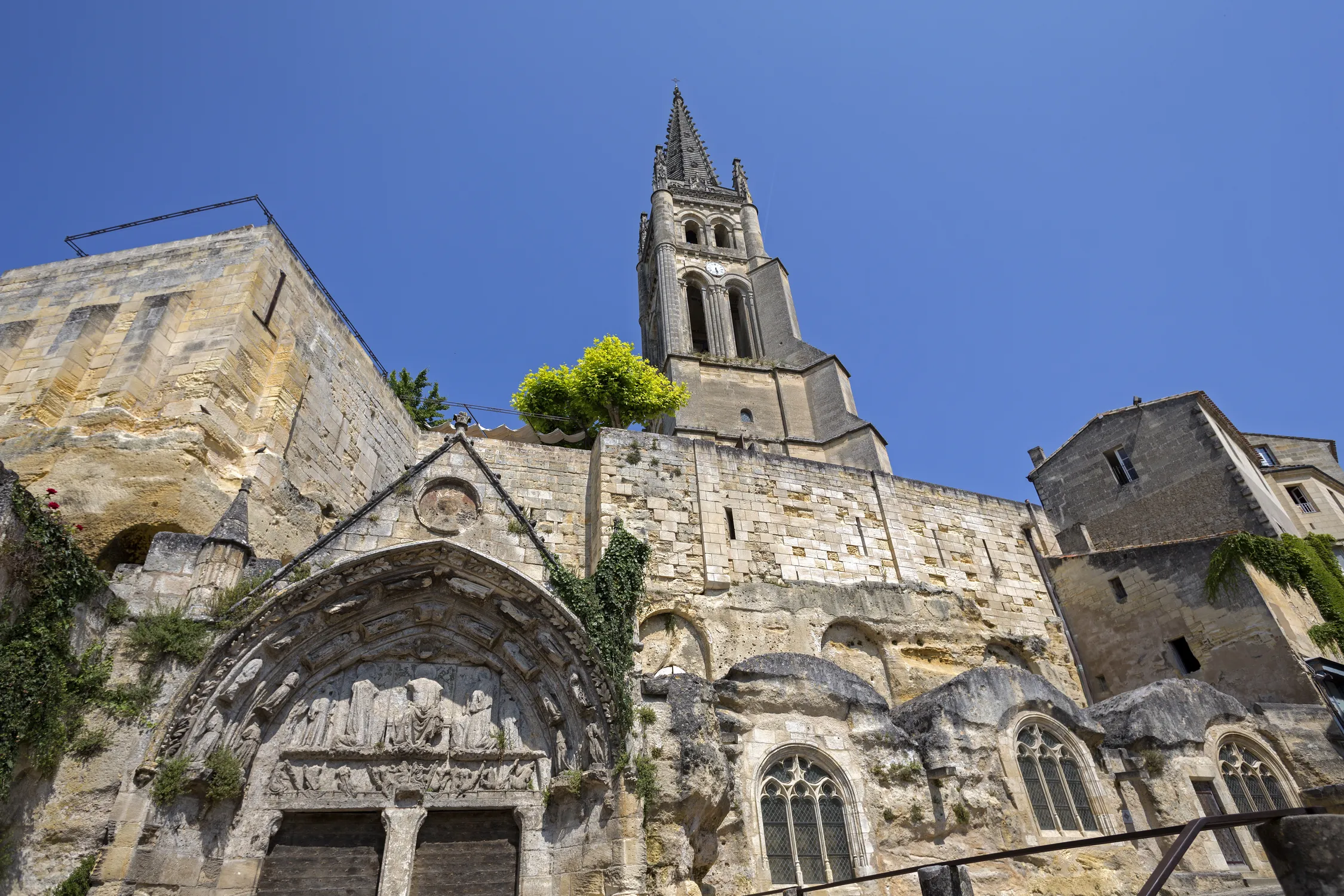
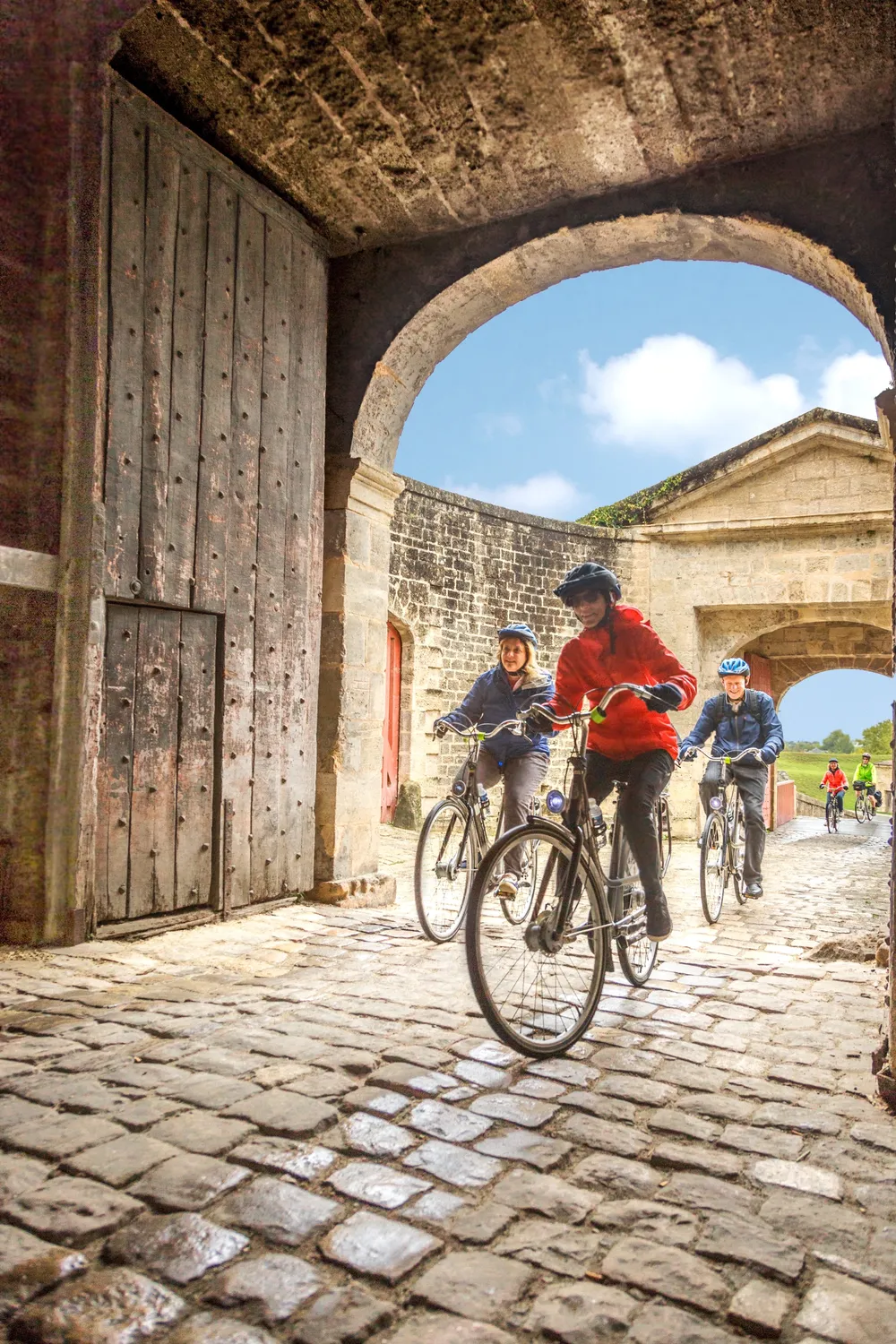
Bordeaux answers with its own range. Near Cadillac, in the commune of Mazères, the medieval Château de Roquetaillade, whose name translates to "carved from rock," has stood for more than seven centuries and remains privately inhabited by the same family. La Cité du Vin, one of the region's newer wine museums, was designed to evoke wine swirling in a glass, its curved gold panels standing out against the historic buildings lining the Garonne. Farther along, the UNESCO-designated medieval village of Saint-Émilion holds centuries of history, while the Citadel of Blaye, a separate UNESCO site designed by the military architect Vauban in the 17th century, guards the river from higher ground nearby.
The Loire Valley closes the architectural arc. Château de Pray, a 13th-century castle remodeled during the Renaissance, sits framed by two towers and traditional French gardens. Nearby, Château du Clos Lucé, Leonardo da Vinci's last home, is where he continued work on some of his most famous paintings under the patronage of the King of France, and Château d'Amboise, among the valley's earliest Renaissance châteaux, holds his final resting place. Château de Chambord, the region's largest such structure, sits at the center of what's often called Europe's largest enclosed wooded park.
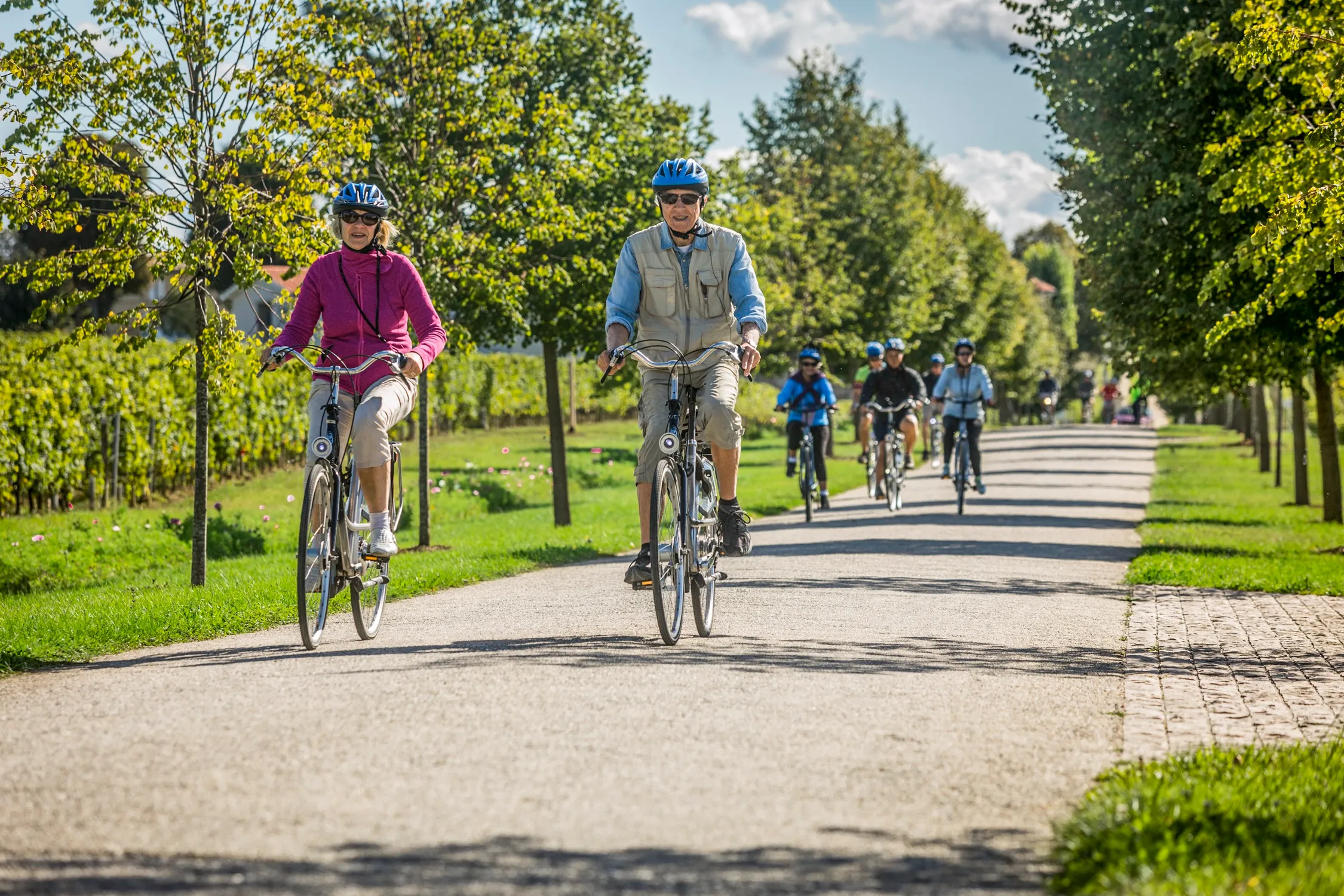
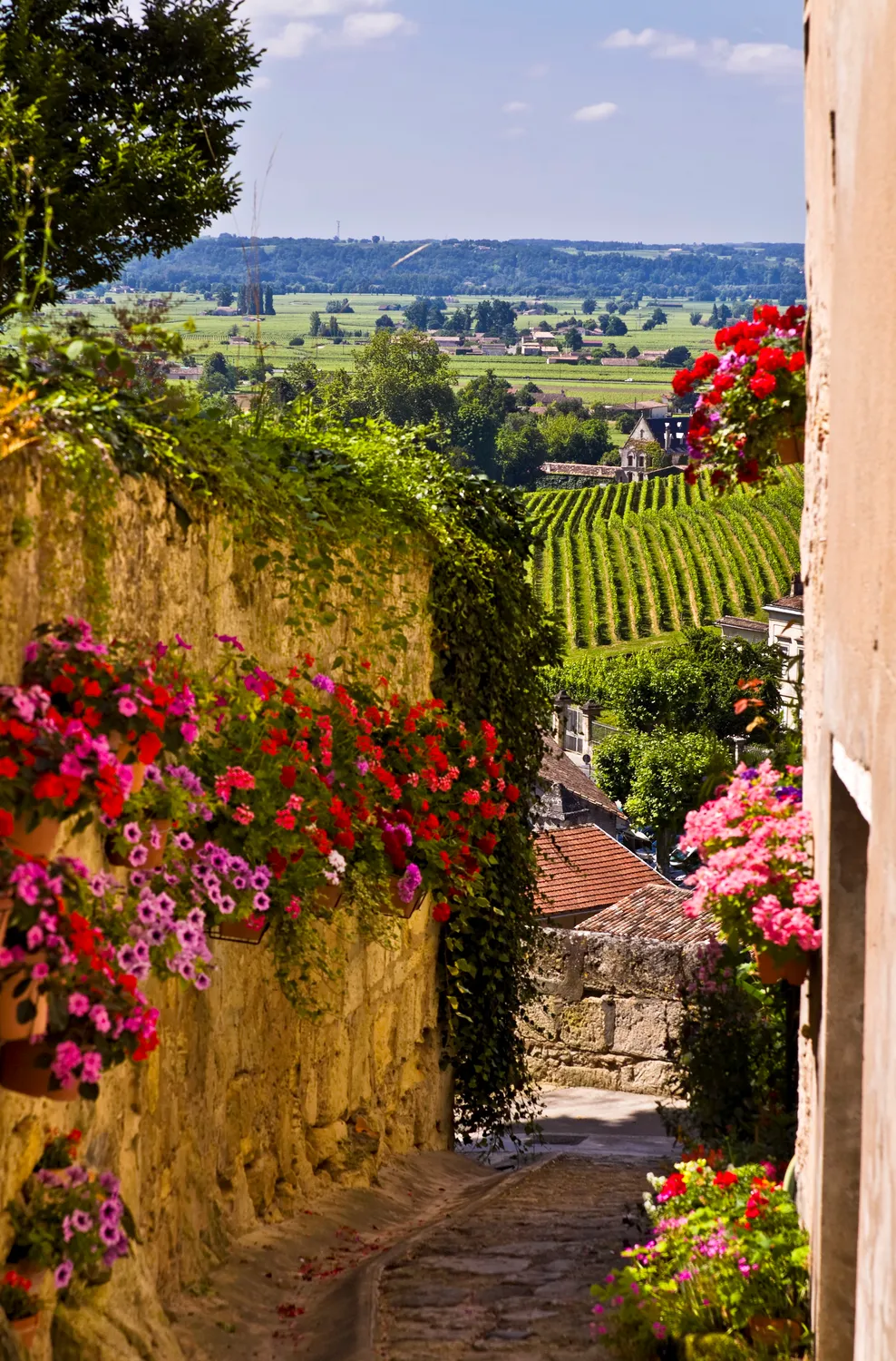
There's a stretch of road into Saint-Émilion where the vines close in on both sides and the grade steepens just enough to notice, and it's easy to forget, legs burning just a little, that most people arrive at this village by coach. Guests who choose the bike instead get a version of Bordeaux that's harder to come by: private vineyard roads, working estates that don't typically wave strangers through their gates, the kind of access that usually requires knowing someone rather than booking a ticket.
That's the throughline across the week's active alternatives, offered at nearly every destination on the rivers. A hike through Libourne's vineyards trades the bike for a steeper, slower climb, timed so the tapas and wine waiting at the summit land exactly when they're wanted. Farther inland, a bike ride through the Médoc winds along quiet back roads between the storied estates of Pauillac and Saint-Julien, two of Bordeaux's most prestigious wine-growing names, before easing to a stop in the small village of Bages.
By the time the week ends in Bordeaux itself, on a genuine city cycling network, the range becomes the point: local trails, hillside vineyards, quiet back roads, city streets—all providing different perspectives on the region.
None of this is to undersell the food and wine—it's genuinely excellent, and it's still very much part of the trip. San Sebastián, visited during the pre-cruise land package in Spain's Basque Country, carries one of the highest concentrations of Michelin-starred restaurants in the world, well over a dozen stars within the city itself, several dozen more across the wider Basque Country, alongside pintxos bars built for standing and sharing. The Garonne threads past Château Latour, Château Mouton Rothschild and Château Léoville Poyferré, three of Bordeaux's most storied estates, and Libourne's open-air markets add fresh spices, French cheese and foie gras into the mix. The post-cruise land package in the Loire Valley closes with a Michelin-starred dinner at Château de Pray. The wine is there. It's just not the only reason to come.
Taste of Bordeaux earns its name, but it earns a longer list of other names too: an architecture tour, a modern art detour, a cycling trip, a small taste of Renaissance history. Travelers who book it for the wine tend to leave talking about everything else they didn't expect to find. Traced end to end, from the cell on Robben Island to the house on Vilakazi Street, Mandela’s South Africa is not an abstraction but physical markers of history you can visit.
By signing up, you declare that you have read our Terms & Conditions and consent to receive offers, information and content via current means of communication as per our Privacy Policy.
You can change your contact preferences at any time by phoning 0800 520 2250 or emailing preferences@amawaterways.com
