Where Cape-Dutch charm meets daring pairings, the Cape Winelands invite you to sip Pinotage, explore three storied valleys, and taste South Africa’s wine country in a refreshingly different way.
From:€15,431€14,581per person
Where Cape-Dutch charm meets daring pairings, the Cape Winelands invite you to sip Pinotage, explore three storied valleys, and taste South Africa’s wine country in a refreshingly different way.
Bordeaux, Burgundy, Tuscany, Napa, and, in the same breath, the Cape Winelands. An hour from Cape Town, the valleys behind the coastal mountains make wine you cannot taste anywhere else, from grapes and pairings the old European regions never tried.
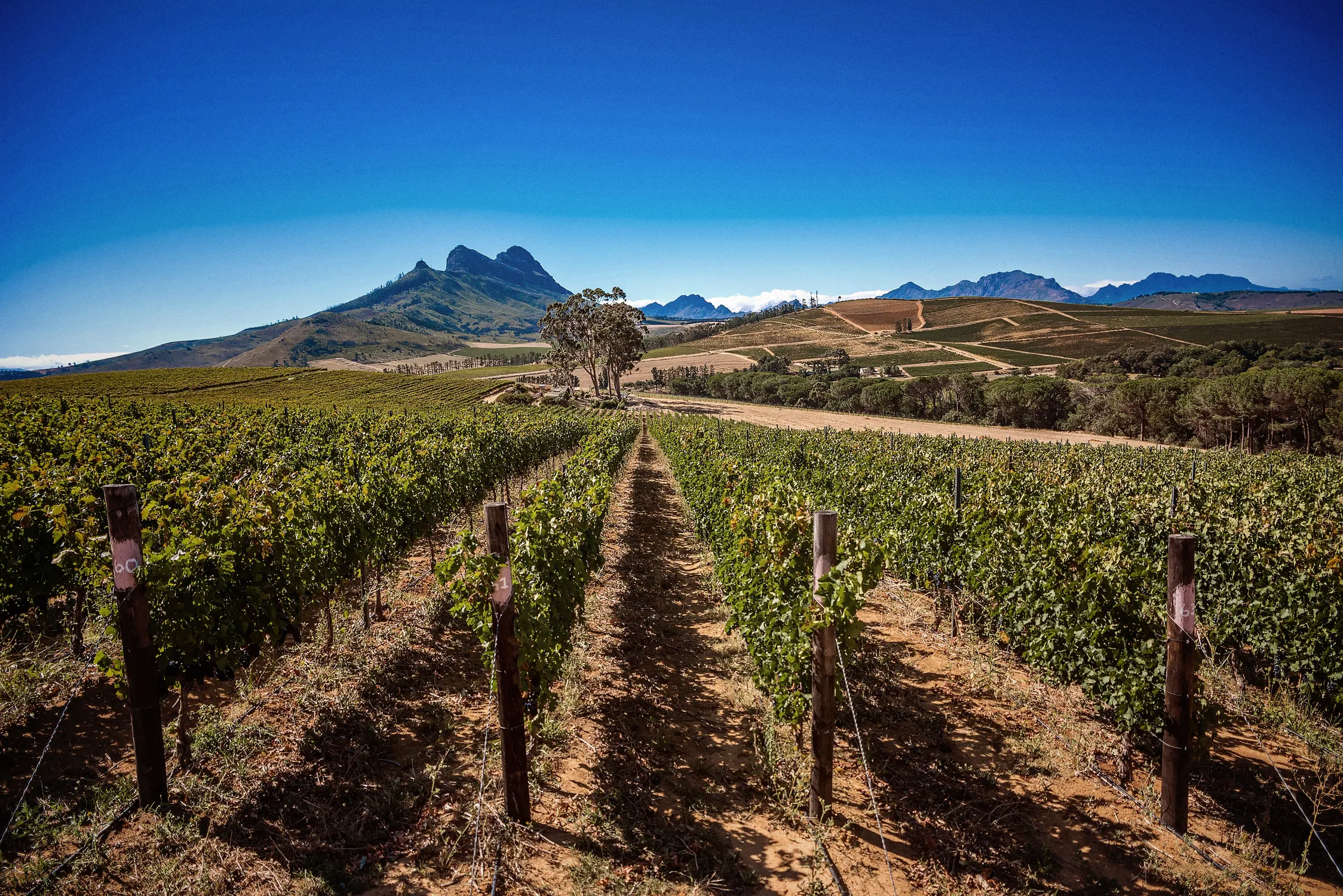
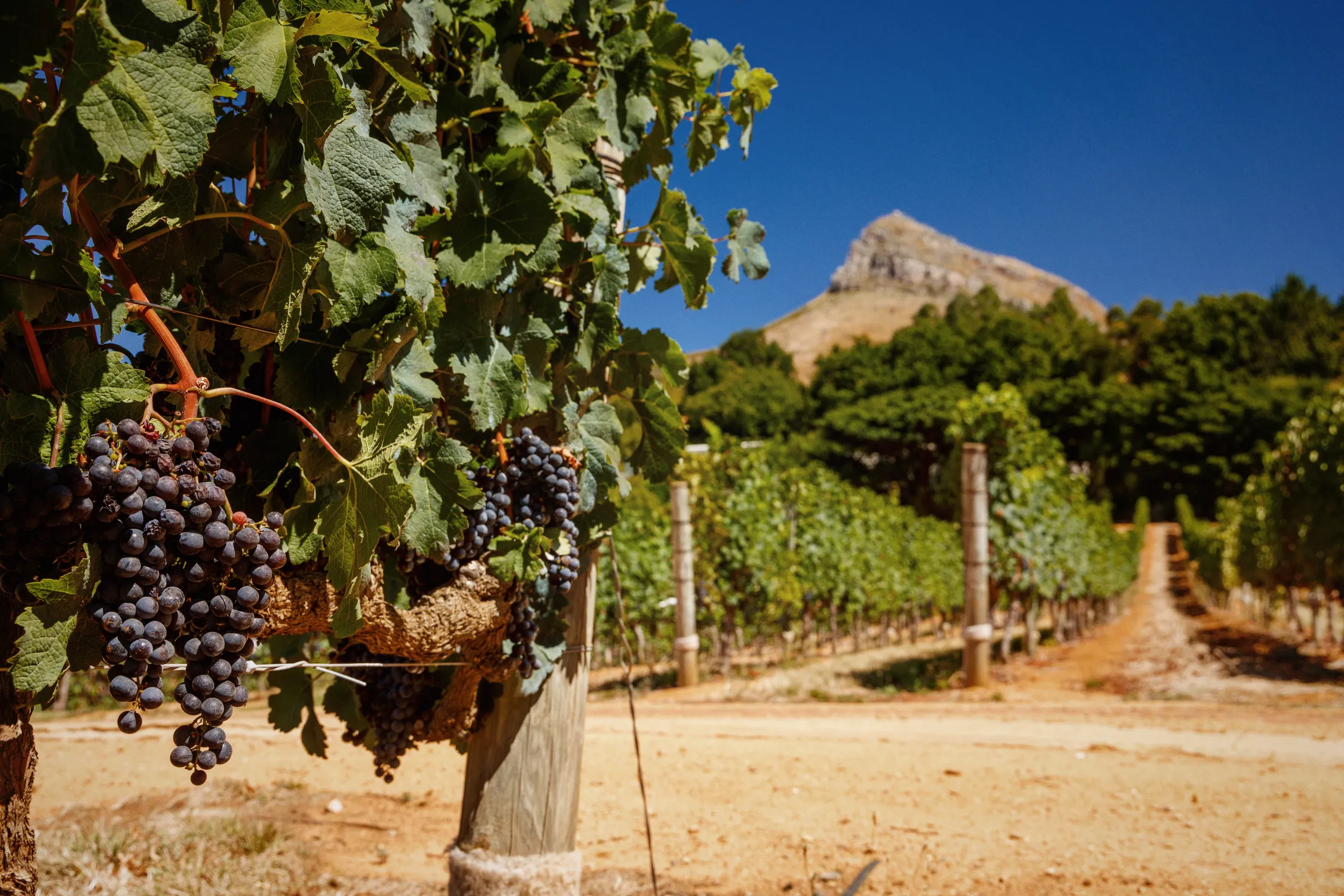
South Africa makes wine at serious scale, and some of it from grapes found almost nowhere else, chief among them Pinotage, a local crossing with no close equal abroad. The tastings lean into that independence. Alongside the reds and whites you will meet pairings a Bordeaux château would never attempt, wine set against chocolate, against salt, against a cupcake, chosen to surprise rather than reassure. The settings help. Cape-Dutch homesteads sit beneath jagged peaks along oak-lined lanes, and many of these estates have been pouring for centuries.
The wine country near Cape Town gathers into three valleys, each with a signature. Stellenbosch is the heartland, its vineyards known for structured reds, Cabernet Sauvignon and Merlot, Shiraz and Pinotage. Paarl, a touch warmer, is known for terroir-driven and fortified wines. Franschhoek, settled by French Huguenots, keeps a French accent and turns out full-flavored whites with a bright line of acidity, and an oak-lined main street of restaurants and galleries that has made it the region’s table.
Wine reached the Cape with the first European settlers. The Dutch East India Company built a supply station here in 1652, a place for ships bound east to take on fresh food and water, and the early vines, Chenin blanc among them, likely came with it. French Huguenots fleeing persecution arrived in 1688 and brought their own cuttings and knowledge. Dutch, French and later German hands together laid the foundation of the industry that fills these valleys today.
You come to the Cape Winelands for the wine and stay for the way it is served, unafraid to set a serious red against something no rulebook allows, with monkeys in the oaks and a mountain wall at the end of the vineyard. Two valleys, a long lunch and a mountain at your back make an easy case for a second day.
By signing up, you declare that you have read our Terms & Conditions and consent to receive offers, information and content via current means of communication as per our Privacy Policy.
You can change your contact preferences at any time by phoning 0800 520 2250 or emailing preferences@amawaterways.com
